Monday, April 29, 2013

How to manage and repair your Android apps


How to manage and repair your Android apps


Tablets, smartphones, and PCs look different on the outside, but on the inside they rely on the same components: a processor, a GPU, memory, and a storage volume that holds an operating system, device drivers, and applications. Your phone and tablet have smaller screens and fewer peripherals than a typical PC has, but you still end up tapping and clicking your way through your data before pulling out a keyboard—albeit a virtual one—to get real work done.
And like a PC, a mobile device can become clogged with orphaned apps, boatloads of images or personal files, and other random bits of junk data. When that happens, the device may slow down, run out of storage space, or behave erratically. To deal with these problems on an Android tablet or phone, you have to know how to monitor and manage resources, move or delete data, and repair or remove obstreperous apps. Here’s how to handle those tasks.

Assess the situation

Like PCs, Android devices may behave unpredictably as they run short of storage space or memory. Symptoms that this may be happening on your device include apps that randomly crash or won’t load at all, and an inability to save new pictures or videos. To see whether you’re running low on space or memory, open the storage and system monitors built into Android. (Note: The menus I refer to may differ cosmetically from those on your device, depending on the version of Android you’re running, but accessing them should be similar.)
Like PCs, Android devices commonly have a multitude of applications, processes, and services running in the background—even after a reboot.
First, bring down the notification shade or open your app drawer, and tap the Settings icon—it usually looks like a gear. Scroll down the long list of settings until you’ll see a menu item labeled ‘Storage’. Tap the Storage icon, and you should see an informative list that details the amounts of storage space currently occupied by the device’s applications, pictures and video, audio files and ringtones, downloads, and miscellaneous files—along with entries indicating the device’s total storage space and its remaining available space.
In the Storage menu, you can monitor how much storage space is left on your device, but you can’t do much else except format a storage volume—which you won’t want to do unless you’re wiping the device clean. To make changes to the device without wiping anything out, you’ll need to use Application Manager, Android’s built-in app manager. To access it, go to Settings, scroll down the list of options to Application Manager, and tap it (on some devices, you may have to tap Applications and thenManage or Manage Applications). With Application Manager open, you can swipe to reveal three columns of apps: Downloaded, Running, and All.
The Application Manager in the Android system settings menu lets you forcibly stop and shut down most applications.
The list of Downloaded apps will show all of the apps you’ve downloaded from the Google Play store, as well as many of the stand-alone apps that your carrier or device manufacturer installed. The Running apps and All apps lists are self-explanatory. At the bottom of the Download and All columns, you’ll see the amount of storage space that the app is using; and at the bottom of the Running column, the cumulative amount of memory that all of the apps are using appears.
Tapping an app in the Downloaded or All column will reveal a menu with various options, including choices to force-stop an app (basically, killing it to free up memory), to uninstall it, or to clear cache and app data. If you want to remove an app, simply tap the Uninstall button. If you’re trying to rehabilitate an app that’s no longer running properly, however, the ‘Clear cache’ and ‘Clear data’ buttons may resolve the issues. Tapping the ‘Clear cache’ button will wipe out any cached data or files associated with the app, and force recaching of fresh copies. Tapping the ‘Clear data’ button will delete all personal data associated with an app, including login data and high scores for various games. The app should return to its freshly downloaded condition. If an app malfunctions, first tap Clear cache. If that doesn’t help, tap Clear data. If that, too, fails to solve the problem, try uninstalling the app (by tapping Uninstall), restarting your device, and reinstalling the app.

Removing and relocating apps and data

As I’ve mentioned, uninstalling an app is as easy as opening Android’s Application Manager, tapping the app in the All apps list, and then tapping Uninstall.
Unfortunately, some apps that the manufacturer preinstalled on your device may be embedded in such a way that you can’t uninstall them unless you have root access to the phone or custom firmware.
Uninstalling an Android application is as simple as navigating to the Application Manager, finding the app, and tapping 'Uninstall'.
In lieu of uninstalling apps to free up internal storage space on your device, you can move apps to a MicroSD card.  Newer devices running Android Ice Cream Sandwich (ICS) or Jelly Bean (JB) may not let you install apps on an SD Card, but older versions of Android have the SD Card installation feature built-in.
Before you move any apps, though, be aware that any app that has an associated home-screen widget or that requires access to certain Android system files won’t function properly when installed on an SD Card.  If you’re unsure about which apps you can safely move, you might want to download an app from the Google Play store called App 2 SD. This simple tool scans the apps installed on your device and lists the ones that you can transfer to SD Card without hazard.
To move an app, you can tap it in App 2 SD, which will open the app’s properties in the Application Manager. Once there, tap Force stop and then tap the Move to SDbutton available in the Storage section. After a few moments, the app will reside on your SD Card.
Many versions of Android let you move nonsystem applications and personal data to an external MicroSD card to conserve internal storage space. The App 2 SD app lets you know which apps are safe to move.
Of course, unless you have a ton of them installed, apps probably aren’t the biggest storage space hogs on your device. Photo and video files tend to take up much more space than apps, so it’s worth moving them to an SD Card as well. To ensure that your device stores new photos and videos on your SD Card automatically, open your camera app and navigate to its settings menu (this will vary from device to device).
In the settings menu, navigate to the Storage section, and change the option from ‘Phone’ or ‘Internal Storage’ to Memory Card.  If you’d also like to move your existing photos and videos, you can easily do so by connecting your device to a PC via a USB cable; the PC should recognize your phone or tablet as a removable storage device, at which point you can move the picture folder from the device’s internal storage to the SD Card by dragging it over.
If you would rather complete the process on the device itself without using a PC, open the file manager included on your device (if your device doesn’t have one, you can find plenty of them in the Google Play store) and browse to your picture/video folder. Tap and hold it, and in the resulting menu, select Move. Then browse to your SD Card and tap Move Here.

Desperate measures

If your Android device won’t boot properly or is otherwise unusable, clearing the device’s cache partition or restoring it to factory defaults may be your only option. Android-based smartphones and tablets usually come with a built-in recovery tool that you can use to perform some maintenance operations or to restore the device’s software to like-new condition. The procedure for entering recovery mode varies from device to device, but it usually entails powering the device down, and holding some combination of buttons while powering the device back on. On a Samsung Galaxy Note II, for example, you launch recovery mode by powering down the phone and then holding down the home and volume up buttons while simultaneously pressing the power button.
Android devices have a built-in Recovery partition and System Recovery utility that you can used to perform maintenance or to wipe the device of data and restore it to fresh-from-the-factory condition.
Once your device enters recovery mode, you’ll see a basic menu containing a few options for applying updates or wiping various partitions. In most instances, you’ll navigate the menu with your device’s volume up and volume down buttons, and you’ll press the power button to select an item. Before wiping all data and performing a factory reset, it’s a good idea to wipe the cache partition alone, since this less extreme step occasionally resolves stability issues. Wiping the cache partition removes app components, temporary files, and other random bits of data stored in the cache, but the cache will automatically rebuild with fresh data when you reboot your phone and begin using your apps.
If after trying every other fix described here, you still have issues with your Android device, wiping the cache and data partitions and returning it to its factory presets will restore the device’s software to like-new condition. But consider this your last resort: The process of wiping data and restoring factory presets is akin to the process of reformatting your PC’s hard drive and installing a clean copy of Windows. You’ll lose every bit of personal data stored on the device’s internal memory and will have to reinstall all of your apps.
If that outcome is acceptable to you, enter recovery mode on your device and choose the options to wipe cache and wipe data. When you reboot your device, it will behave as though you were powering it up for the first time.

20 must-know Windows 8 tips and tricks


Windows 8 is rife with features and behaviors that conspire to perplex even the most experienced PC users. Not all of them are bad, per se, but few of them are immediately intuitive. Making matters worse, the OS was primarily designed for touch control, and as a result, many mouse and keyboard commands feel like tacked-on afterthoughts.
But help is on the way.
We've assembled a list of our favorite Windows 8 shortcuts, tricks, and workarounds. Many focus on making the most of the OS on a traditional desktop PC, so if you're interested in touch gestures, please check out our article that focuses directly on the Windows 8 touch experience. Now let's start our journey of discovery with a look at easy-to-use (though often tough to remember!) Windows 8 hotkey commands.

Employ the hottest hotkeys we know

In these key combinations, hold down the Windows key (normally located between Alt and Ctrl) and another key, as described on this list.
  • Press the Windows key to enter the tiled Start screen.
  • The Windows key + M minimizes everything that's showing on the desktop.
  • The Windows key + E opens Explorer for quick access to folders.
  • On the Start screen, press the Windows key + D to instantly get to the desktop.
  • The Windows key + Tab opens a list of currently running programs.
  • The Windows key + Print Screen takes a screenshot and saves it in a Screenshots folder nested in your Pictures folder. 
  • To take a screenshot on a Windows 8 tablet, simultaneously press the Windows button and the volume-down button on the tablet chassis.
  • The Windows key + Q opens a global search menu. Type what you're looking for and where you would like to look.
  • The Windows key + W opens a search in your system settings to quickly locate and change system properties.
  • The Windows key + F opens a file and folder search.
  • The Windows key + Pause opens the system properties page to show you a quick rundown of your specs.
  • The Windows key + "," (that's the comma sign!) makes all current windows transparent, giving you a peek at the desktop as long as you hold down the Windows key.
  • The Windows key + "." (the period) snaps a window to the right or left side (toggling each time you press ".").
  • The Windows key + R prompts the Run command—useful for quickly launching apps and other routines with a command prompt.
  • The Windows key + X opens the Quick Access Menu, exposing system functionality such as the Command Prompt, Disk Management, File Explorer, Run, and more. Alternatively, you can right-click on the bottom right corner of the screen to spawn the Quick Access Menu.
  • The Windows key + I opens the settings menu, giving you quick access to the Control Panel, Personalization, and your Power button, among other features.
  • The Windows key + O locks orientation on devices with an accelerometer.

Zoom in tight

See all your tiles and groups at once with semantic zoom.
The Start Screen is full of nice, big, chunky tiles that represent all your apps. The tiles are easy to see in small groups, but what if you have hundreds of apps installed? Most will be hidden from view, unless you want to do a lot of scrolling. Enter the new semantic zoom feature. If you’re using a touch display, squeeze the Start screen with two fingers to receive a bird’s eye view of your entire screen contents. And the feature is also available to mouse and keyboard users: Simply hold down the Ctrl button, and use your mouse wheel to zoom in and out.

Categorize your apps

Start screen customization for the organized.
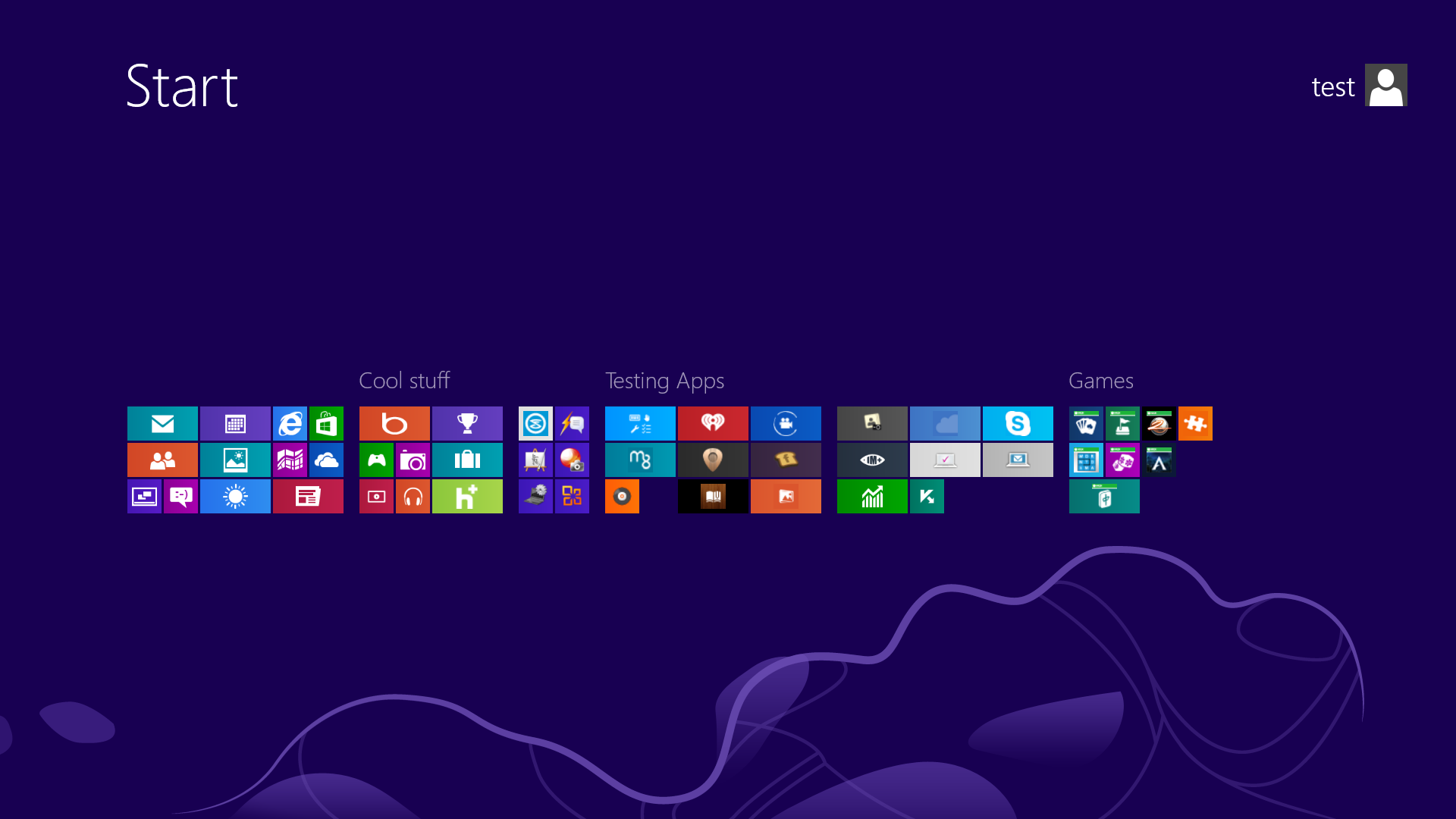
Your Start screen can become a cluttered mess if you collect too many apps and other elements that have been pinned to the screen as tiles, so take advantage of built-in organization tools that let you divide everything into labeled groups.
First, drag all the tiles you want to assign to a single group to the far right-hand side of your Start screen in vacant territory; the OS should sequester the tiles together. Once you're satisfied with your assembly, use semantic zoom (described above) to get a bird's eye view of your desktop. Now right-click the group (or simply drag down on it), and select the "Name group" option on the left of the bar that appears below. Type in the name, and enjoy your newly organized Start screen!

Close an application

Closing an app sounds simple enough, but you'll quickly notice that close buttons are hard to find in Windows 8. That's because Microsoft encourages us to run apps in the background where they'll take up minimal resources, but still be accessible at any time.
Nonetheless, if you insist on being rebellious, you can close an app by dragging it with your mouse or finger from the top of the screen all the way down to the bottom. As you drag, the app will miminize into a thumbnail, and when you reach the bottom, it will disappear from view. Alternatively, you can still close apps via Alt + F4 and through the Task Manager.

Use centralized, contextual search

Search for anything in any app from one place.
The Search function located on the Charms bar is packed with power, letting you search the directories of not only your Windows 8 machine, but also the greater Windows ecosystem. Simply choose the bucket of data you want to sift through—it could be all your installed apps, your system settings, your files, your mail messages, or even an external service like the Windows Store or Bing Maps—type in a keyword, and hit Enter. The Search function will then return the results, perfectly contextualized for the database you’ve addressed
Oh, and how's this for cool? You don't even need to hit the Charms bar to access Search. From the Start screen, simply start typing, and you'll be quickly whisked to the text-entry field for search queries. Try it. It works!

Adjust privacy settings

Customize your privacy settings to your liking.
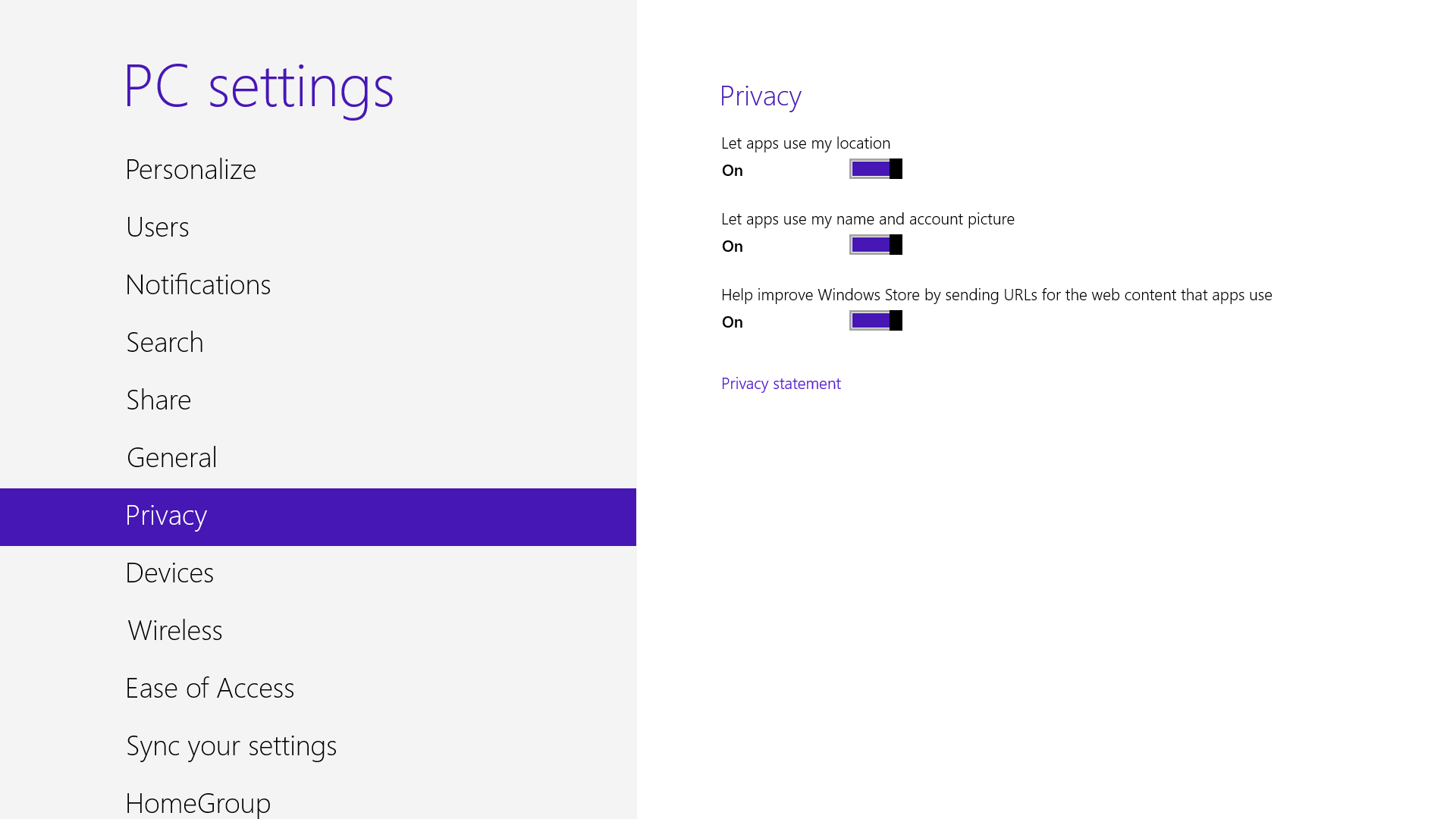
A lot of apps tap into very personal information by default. Indeed, your pictures, location, and name are liberally woven throughout the system, and like many users you may not be comfortable trusting your machine with that much sensitive data. To adjust the settings, press the Windows key + I, and go to Change PC Settings. Select the Privacy option, and personalize the settings for your personal data there.

Adjust SmartScreen settings

Choose your own level of safety with SmartScreen.
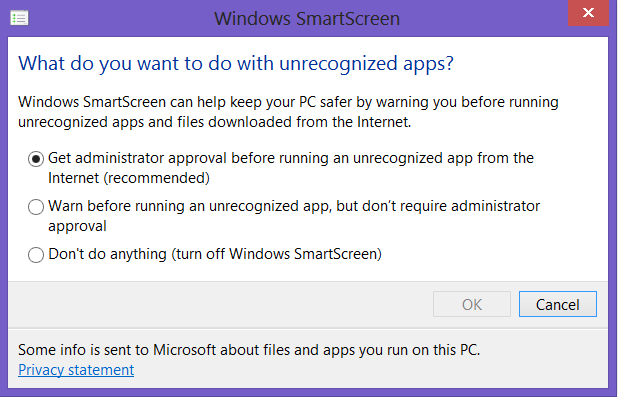
SmartScreen warns you before running an unrecognized app or file from the Internet. While it's helpful to be aware of a file's source, constant warnings can also get a little annoying. By default, you need an administrator's permission, but this can easily be adjusted to just a warning or no indication at all. Using the magic search function described above, type "security" at the Start screen and find the "Check security status" in the Settings tab. From this area, you can adjust various security settings, including the Windows SmartScreen.

Bring up the Quick Access Menu

The secret Start button for power users is hidden at the bottom-left.
Right-clicking on the lower left of the screen—whether you’re in the Windows 8 Start screen or in the desktop—will bring up the Quick Access Menu, which enables a direct line to many key system management chores, including Disk Management, Task Manager, Device Manager, and Control Panel.

Use Windows 8 apps and your desktop simultaneously

Because the Windows 8 experience is split between new Windows 8 Store apps and old-school desktop apps, the operating system is prone to some strange behaviors. Case in point: When running a multimonitor setup, Windows 8 apps will consume your main screen, leaving your secondary screen running the desktop. This arrangement would seemto allow full-screen multitasking among both types of apps—a modern app on the left side, a desktop app on the right side—but this isn’t the case. Indeed, as soon as you begin using the desktop on your secondary screen, the new-style Windows 8 app disappears, and your primary screen begins running the desktop.
But here’s a workaround. On your primary screen, use the new Windows 8 split-screen “snapping” function to run the desktop and a new Windows 8 Store app together. The desktop can take up the left-hand sliver, while the Windows 8 app consumes the majority of the screen. Now use your second display for a full desktop view. In this arrangement, you can fully multitask between new-style apps and desktop apps, and both windows will be large enough to be useful.

Go to Task Manager for Startup items

Task manager is more useful than ever.
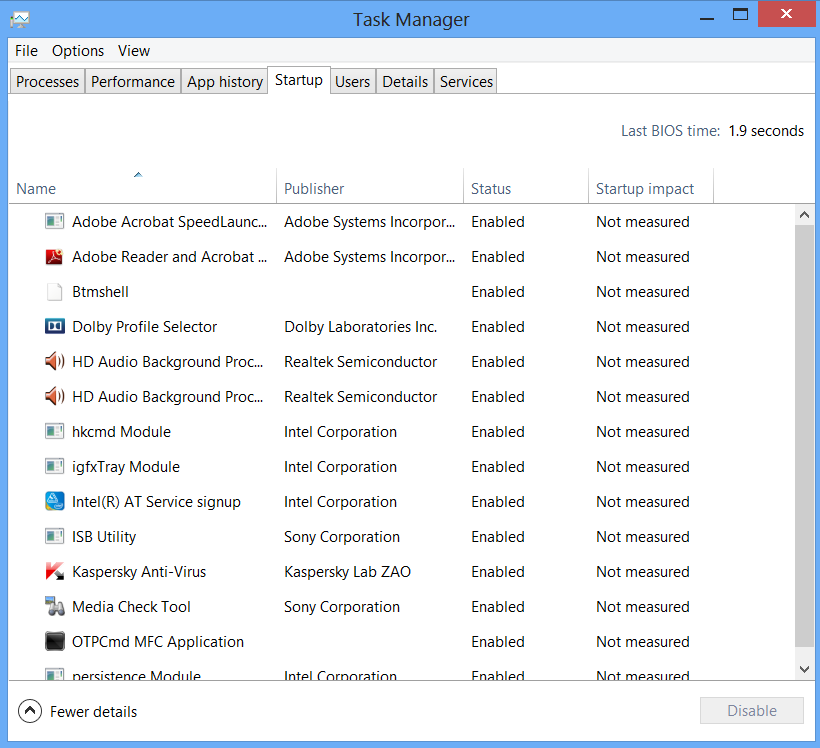
You no longer have to run the MSConfig program to change startup items. Startup items now show up in a tab on Task Manager. Simply press Ctrl + Alt + Del and select Task Manager. Click the "More details" tab at the bottom and find the Startup tab at the top.

Share and share alike

Play with the Share charm in every app.
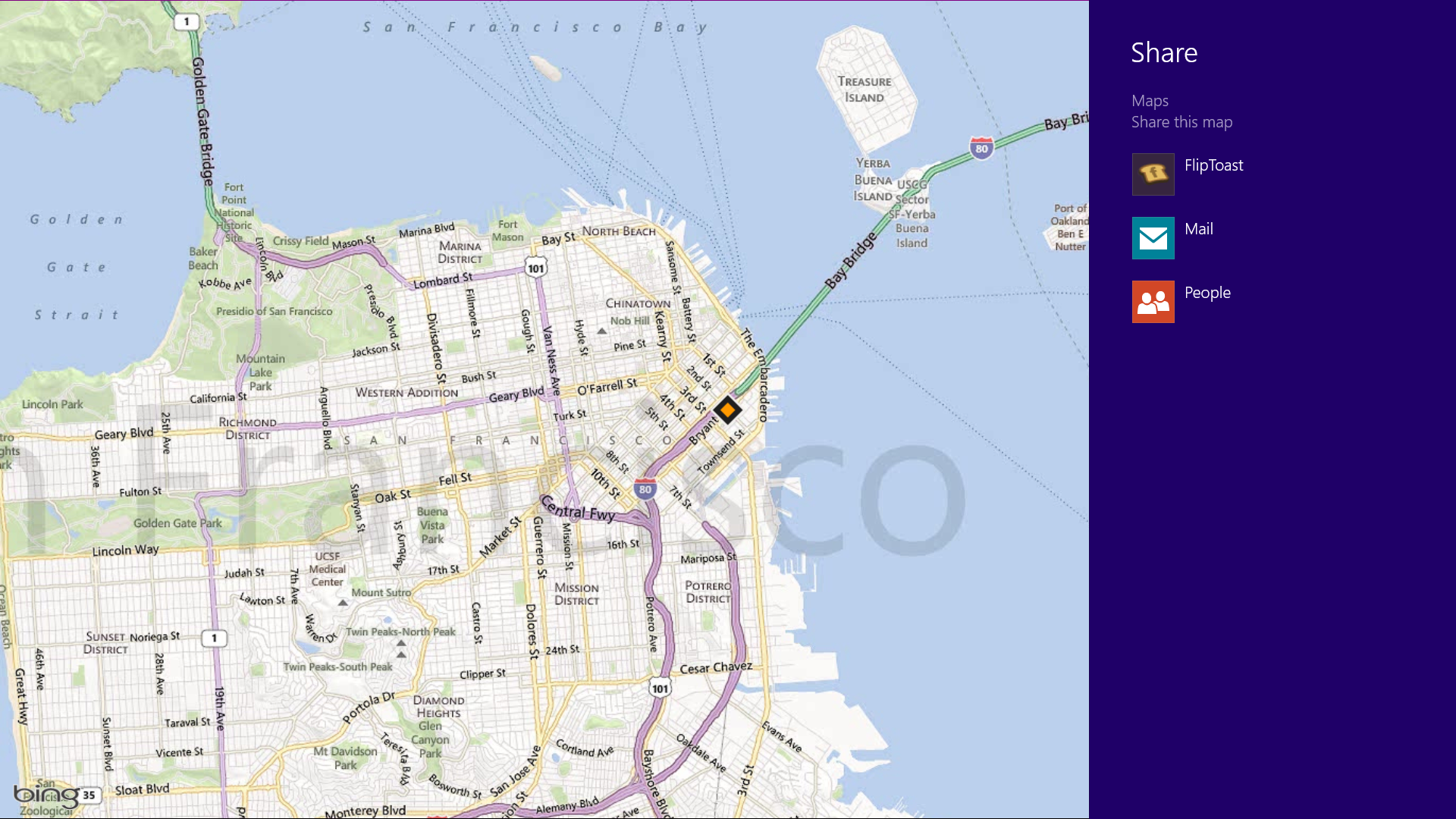
Windows 8 is Microsoft’s first social-media-aware PC operating system. Using the Share button located on the Charms bar, you can pick any number of elements from your Windows 8 Store apps—say, a location from your Maps app, a news story from the Finance app, or a even a contact from your People app—and then distribute that item to friends via other Windows 8 programs.
Perhaps most conveniently, you can quickly share a photo via email or Twitter, or to your own SkyDrive or Windows Phone. The Share button is contextual, and the more you use it, the more you’ll discover which apps share with each other, and which don’t. (Hint: None of your desktop apps offer sharing opportunities through the Charms menu.)

Create a picture password

A fun way to protect your system.
Using a picture password is a fun way keep your device secure while not having to remember a complex password. To enable it, press the Windows key + I to get to the settings charm. Click "Change PC settings" at the bottom right, and go to the Users tab. Under "Sign-in options" will be the "Create a picture password" button. This will give you the option to choose any picture, and then define three gestures anywhere on the image. Your gestures can be circles, swipes and clicks.
For example, to set a picture password for the image above, you could click on the highest palm tree, draw a circle around the island, and then swipe down from the lens flare in the upper right. Just beware: The direction of each gesture matters! After confirming it a couple times, your picture password will be set.

Boot to the desktop without an app

Skip the Start screen and get right to the Desktop.
One of biggest complaints about Windows 8 is that it boots straight to the Start screen—an annoyance for many committed desktop users. The Start8 utility helps you avoid this indignity (among other cool features), but you can actually boot straight to the desktop without installing anything extra.
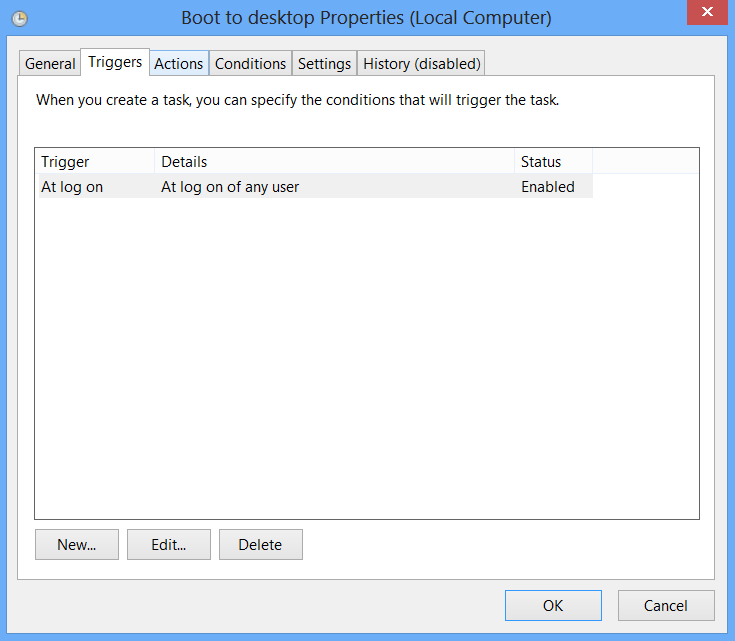
Go to the start screen and type in "schedule" to search for Schedule Task in Settings. Click on Task Scheduler Library to the left, and select Create Task. Name your task something like "Boot to desktop." Now select the Triggers tab, choose New, and use the drop-down box to select starting the task "At log on." Click OK and go to the Actions tab, choose New,and enter "explorer" for the Program/Script value.
Press OK, save the task, and restart to test it out!

Log in without a username or password


To speed up the log-in process, you may want to disable the username and password log-in screen. You can do so by opening the Run window (press the Windows key + R) and typing in "netplwiz" to access the User Accounts dialog box. Uncheck the box near the top that says "Users must enter a user name and password to use this computer." ClickOK, and enter the username and password one last time to confirm your choice, and you are all set for easy access to your system

Refresh your PC

Enjoy a fresh PC without losing everything.
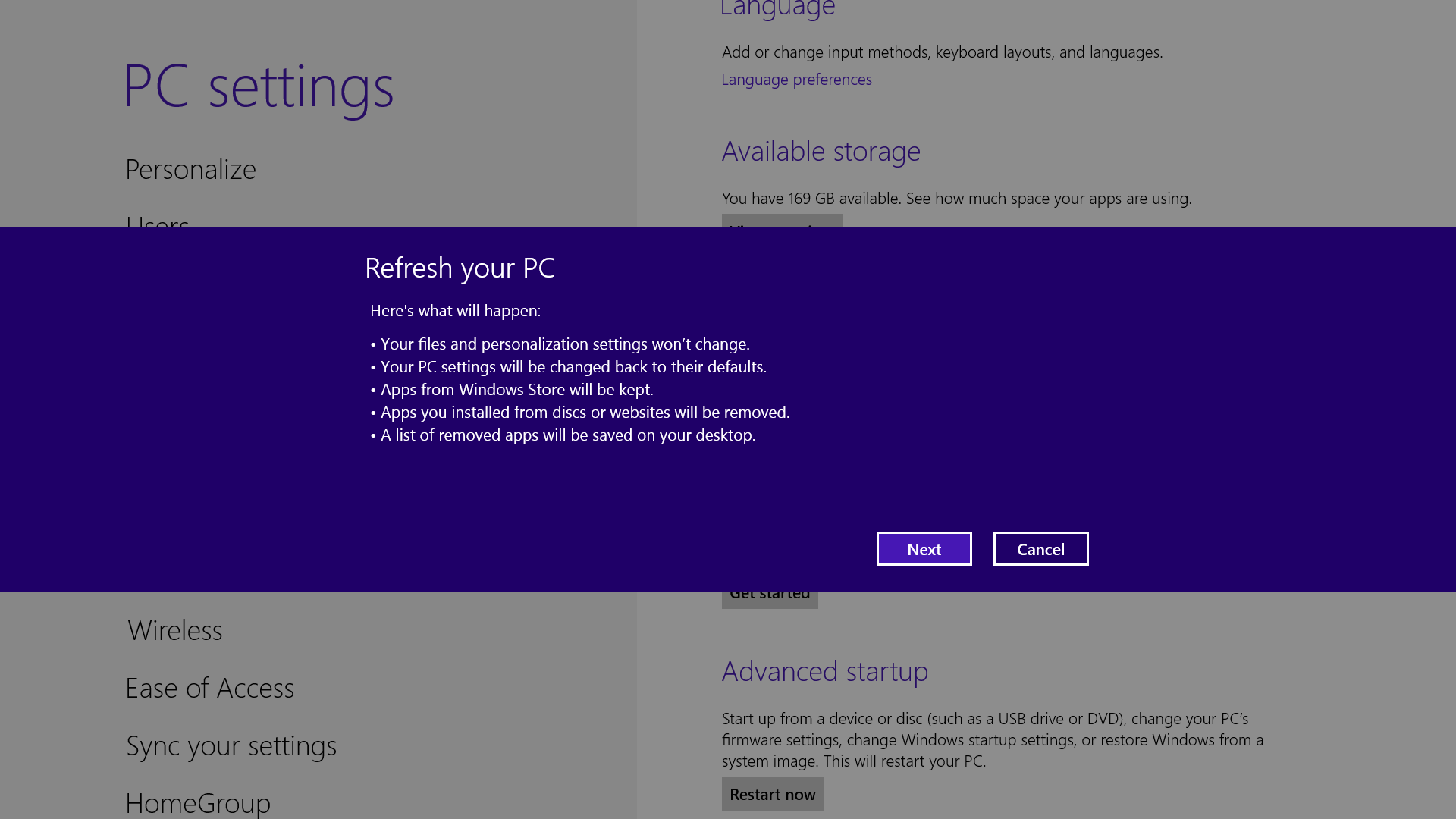
If your system is feeling a little sluggish, it may be time for a refresh. In the past we would have to find our copy of Windows 7, back up all of our data, and perform a fresh install to enjoy that back-to-factory-fresh feeling. But now Windows 8 allows you to perform a fresh install from within Windows without losing any data.
In order to perform the refresh, go to Settings and click the Change PC Settings tab near the bottom. Select the General tab and find the "Refresh your PC without affecting your files" section near the middle (you may also select "Remove everything and reinstall Windows" to get the true factory settings treatment). Select "Get started" and press "Refresh." After a few minutes the PC will restart, and you will have a fresh copy of Windows 8.

Start in Safe Mode

Safe Mode is a great way to get into your system when something won't allow you to start up normally. Troubleshooting becomes a breeze when corrupted drivers and files aren't loaded that prevents a system from functioning. It used to be as easy as pressing F8 when the system starts up, but doing so with Windows 8 will take you to Automatic Repair Mode. The trick to getting back to good old fashioned Safe Mode? Hold down the Shift key and press F8 while booting up.
This takes you to the Recovery mode. Select "advanced options," then "troubleshoot," then the "advanced options" again (there are a lot of advanced options). Select Windows Startup Settings and finally the Restart button. This will reboot the computer and give you the option to boot into Safe Mode.
If you need to get into Safe Mode from within Windows, open the dialog box (the Windows key + R) and type "msconfig" (no quote marks). Select the Boot tab and check the Safe boot box. The system will continually boot into Safe Mode until you go back and uncheck the box.

Turn Live Tiles on and off

Use the Live tile option to customize what you want to see.
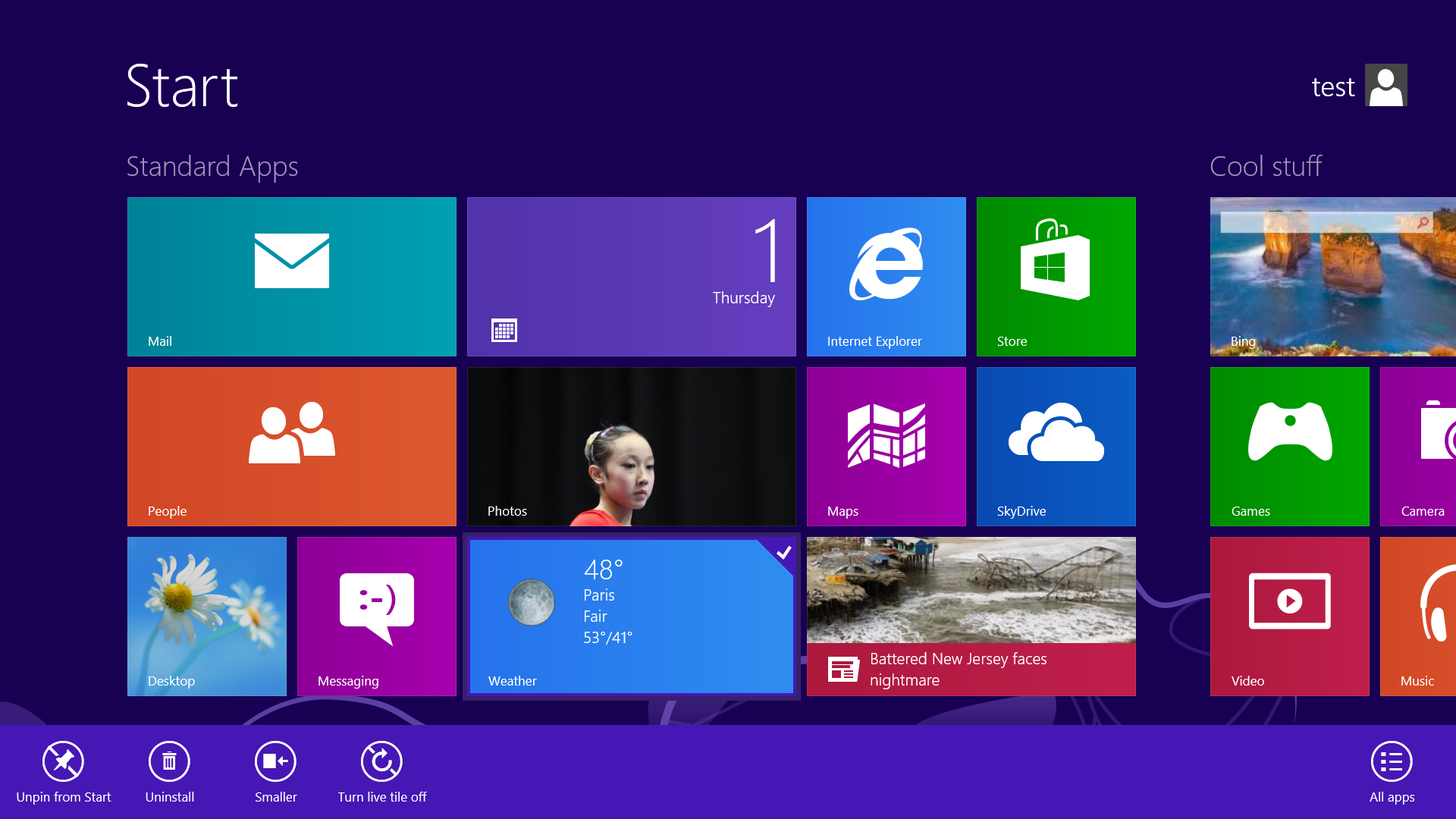
When looking at the plethora of tiles on your Start screen, the view can get stagnant, despite all the pretty colors.This is where Live Tiles come in. They offer real-time data right on your Start screen, and you don't need to open any apps. For example, the Weather tile will show you the current conditions, and Mail will show you the subject of the latest message you've received.
You can customize which apps are live and which aren't by right-clicking on the tiles. A settings bar on the bottom will pop up with an option to turn the Live Tile on or off. Simply select the preferred option, and you're all set. Note, however, that not all apps have a live, real-time data-streaming option.

Find the Windows games folder

Currently, the games folder used in Windows 7 isn’t present in Windows 8. Fear not; if you install any current-generation PC game that would regularly save to this folder, the folder is automatically created. For a quick way to find it, right-click on the game icon on the Start screen and choose “Open file location” at the bottom.

Activate Family Safety

Let your kids play without having to worry.
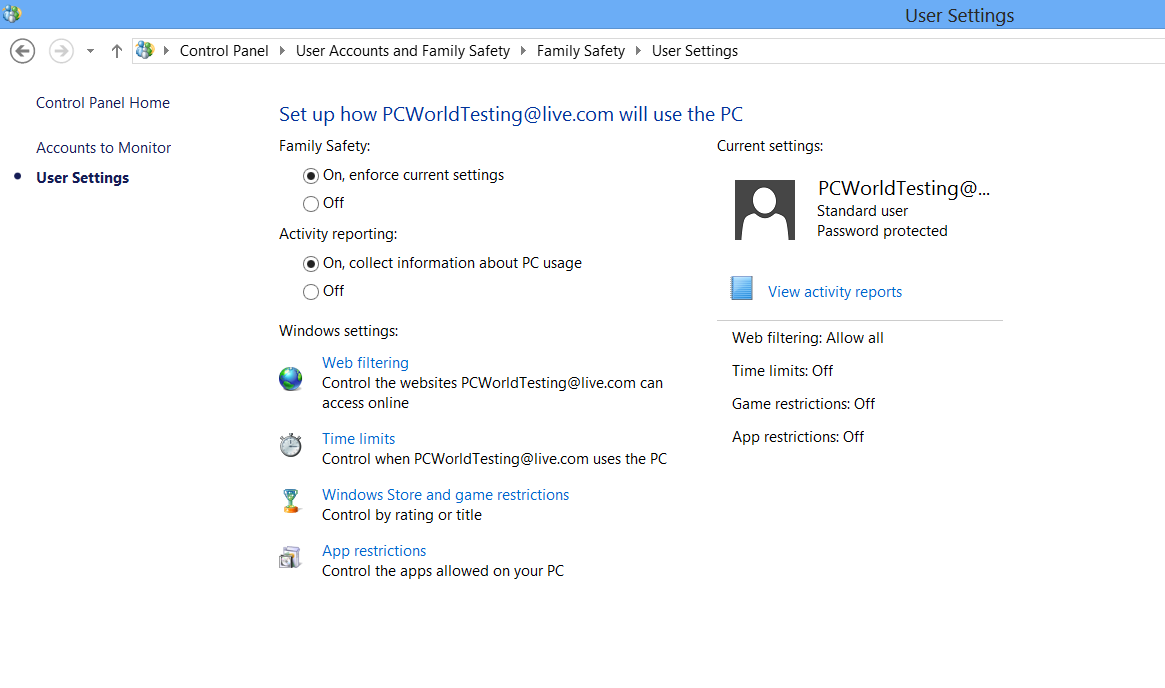
Want to avoid some nasty surprises on your credit card? Create a separate, standard account on the device for your kids (Family Safety can't be applied to an administrator account). You can activate Family Safety by going to the Control Panel, User Accounts,and Family Safety, and selecting the account you would like to apply it to. From these settings you can get reports on the account's activity; set a level of Web filtering; set time limits; and enforce Windows Store, game, and app restrictions.

Shut down with one click

Easy to create button to shut down.
Windows 8 hides the Power button in the Settings menu, forcing a multistep process just to shut down one's PC. But thanks to a crafty shortcut trick, you can pin a Shutdown button right onto the bottom of your desktop. Here's how.
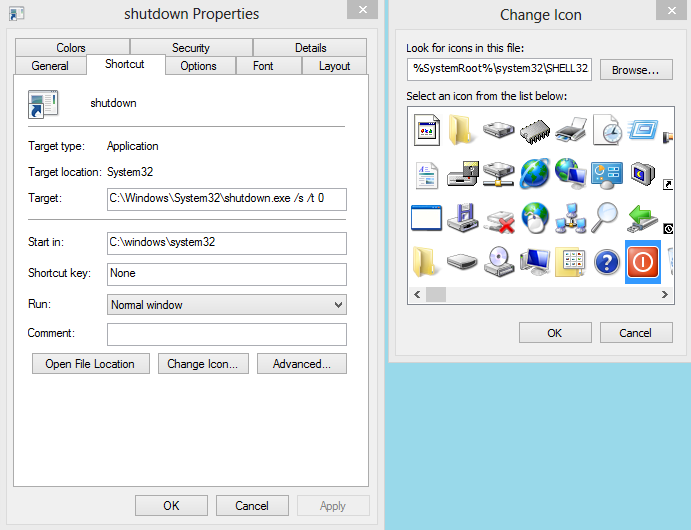
Create a shortcut on your desktop (right-click, go to New, then Shortcut). Enter "shutdown /s /t 0" (with no quotes, and, yes, that's a zero not an "O") as the location of the item, and press Next. Now name the shortcut (prefereably "Shutdown") and press Finish.
Right-click the shortcut, and navigate to Properties. Choose Change Icon in the Shortcut tab, and then OK to leave the warning box. Choose an icon of your choice from the list. In the screenshot above, you'll see we chose a Power button.
Right-click the shortcut again, and select Pin to Start. You can place the icon on your Start screen wherever it's convenient. Clicking it will instantly shut down your computer.